Quartz Vs. Quartzite Kitchen Countertops
Quartz and quartzite sound similar but are different materials. One is an engineered surface made with mineral content and binders. The other is natural stone quarried in slabs. Their appearance, variation, care, and selection process differ.
Quartz: Consistent And Lower Maintenance
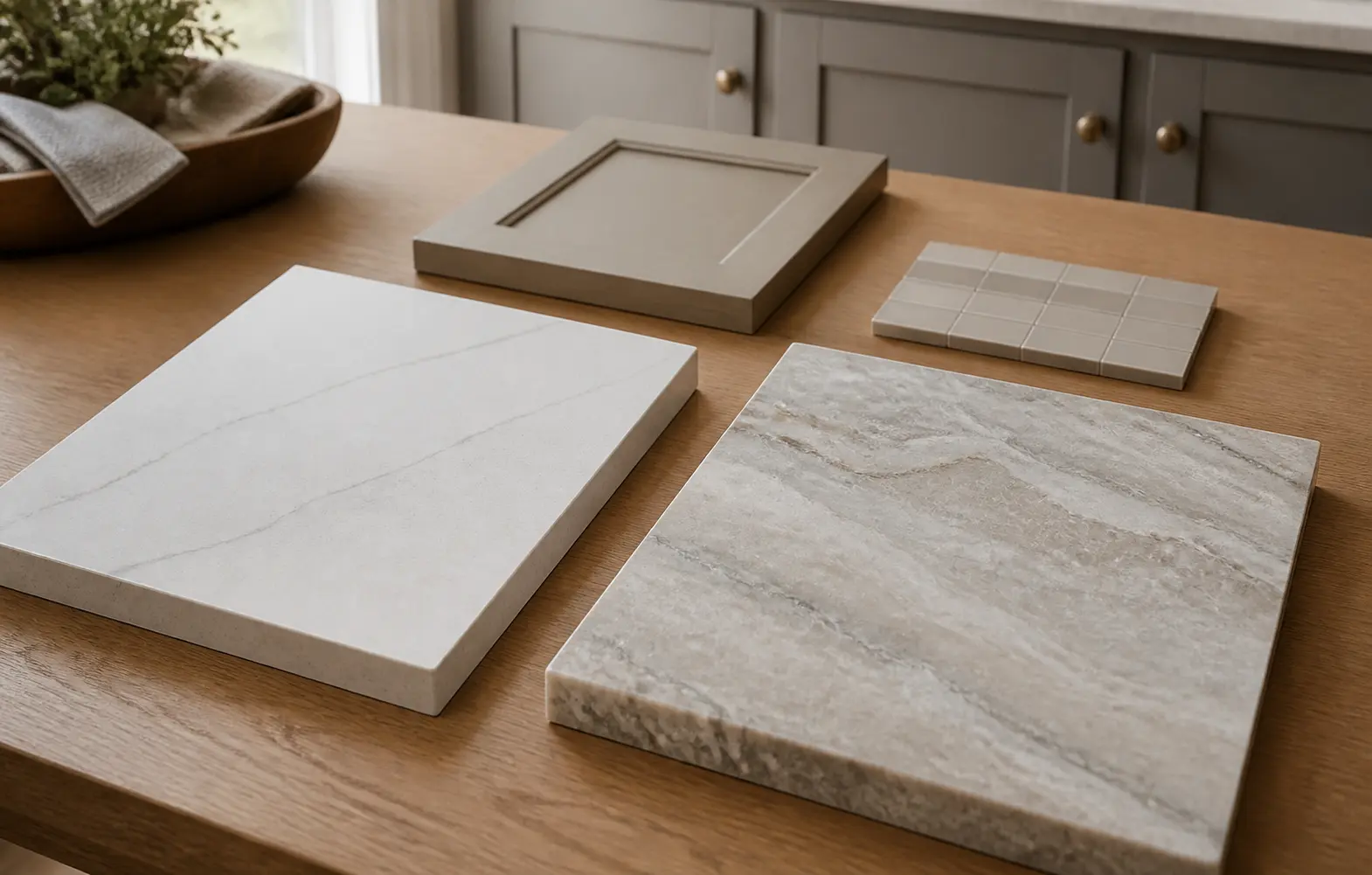
Quartz is available in a broad range of controlled colors and patterns. Samples are generally more predictable from one slab to another, and routine sealing is not normally part of care. Direct high heat should still be kept away from the surface according to the manufacturer guidance.
Quartzite: Natural Movement And Variation
Quartzite is a natural stone, so each slab has unique movement, fissures, and mineral characteristics. Slab selection and seam planning matter. Care requirements vary, and sealing may be recommended by the fabricator or stone supplier.
Questions To Ask Before Choosing
- How much natural variation do you want to see?
- Are you comfortable with periodic sealing if recommended?
- Where will seams fall in the final kitchen?
- Will the material support the selected edge and overhang?
- How does the full slab look under the room lighting?
- What care does the supplier recommend for this exact product?
Review The Actual Material
A small sample cannot show the movement of a full natural slab. For quartzite and other patterned stones, review and document the actual slabs before fabrication. For quartz, confirm the current product sample and how the pattern will continue across seams or backsplashes.