Custom Vs. Semi-Custom Kitchen Cabinets
Cabinet categories describe how much flexibility a manufacturer or fabricator offers. They do not guarantee that one choice is automatically better for every kitchen. The best value comes from matching the cabinet level to the room and the storage problems it needs to solve.
Stock Cabinets
Stock cabinets use a limited set of sizes, door styles, finishes, and accessories. They can work well when the room accepts standard dimensions and the layout does not depend on highly specific storage or panel details.
Semi-Custom Cabinets
Semi-custom programs begin with standard cabinet construction but allow more modifications, finishes, accessories, and dimensional adjustments. They often provide a useful middle ground for homeowners who need flexibility without specifying every component from the beginning.
Custom Cabinets
Custom cabinetry can respond to unusual dimensions, detailed alignments, specific materials, or storage designed around a particular household. That flexibility can be valuable, but it should solve a real design need rather than simply add scope.
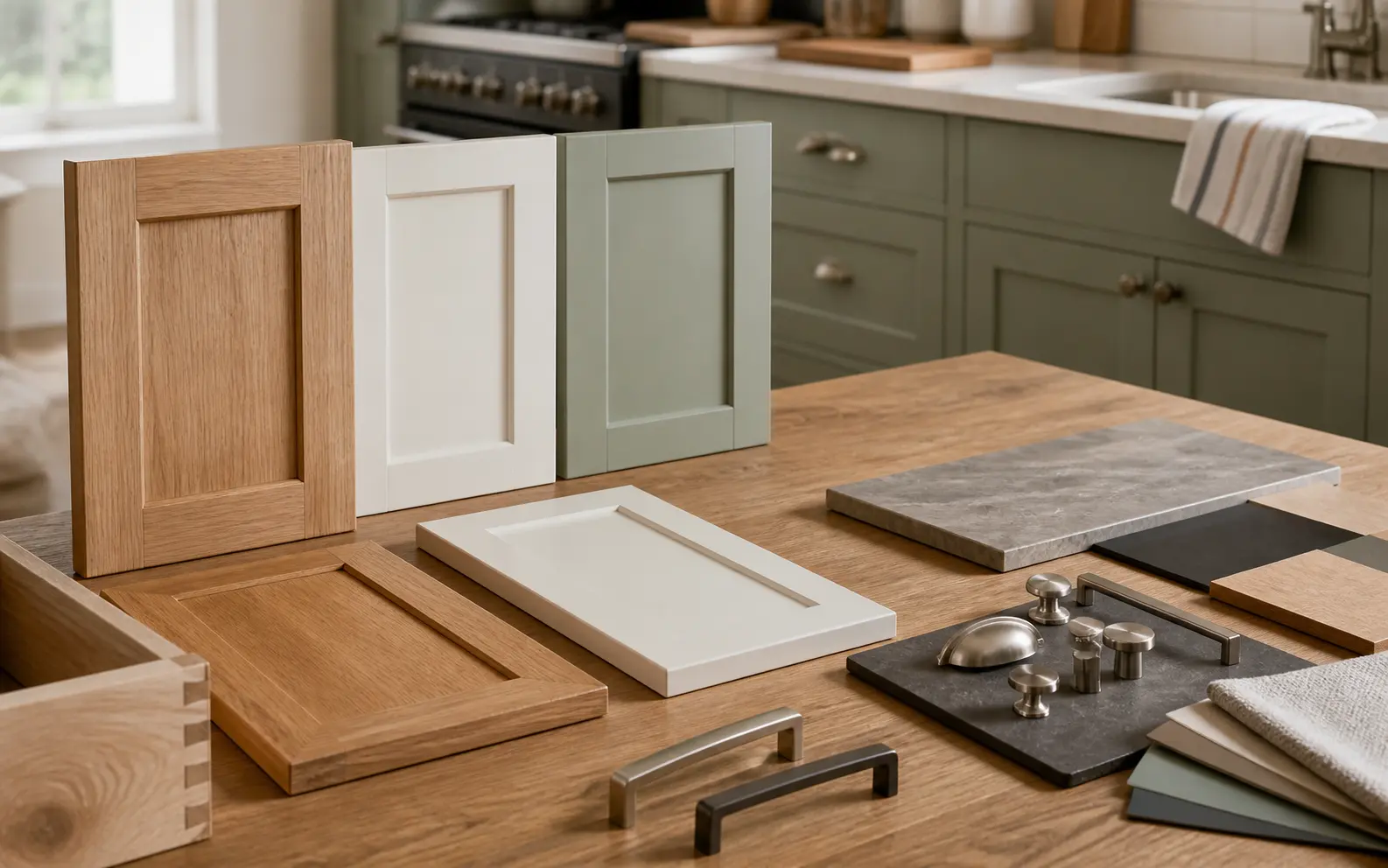
Compare More Than The Door Style
- Box and drawer construction
- Available widths, depths, and height modifications
- Finish consistency and touch-up expectations
- Hardware quality and adjustment
- Interior accessories and replacement availability
- Lead time, delivery, and installation requirements
Where Customization Often Matters Most
Tall pantry walls, appliance panels, tight corners, unusual ceiling conditions, detailed islands, and transitions into adjacent millwork can benefit from added flexibility. Standard cabinets may still be the better choice in straightforward runs where fillers and panels can resolve the room cleanly.